Okie High Life
Three Oklahoma-based companies have released locally produced THC-infused beverages with Delta-9 (full name Delta-9 tetrahydrocannabinol), the currently legal psychoactive compound derived from hemp: Lively Beerworks and Prairie Artisan Ales in Oklahoma City, and High Tide Beverage (listed as an Oklahoma company without an address). National brands have been producing the beverages since a 2018 farm bill made it legal to sell hemp-derived THC as long as the total THC presence in beverages remains below the 0.3% by weight threshold. The drinks have been incredibly popular in states like Texas with no legal marijuana. Total Wine has leaned heavily into the trend, and the Moore, Oklahoma, store has a large selection of national brands, and Total Wine stores in Texas have an entire Target-sized aisle, a commitment based on some industry experts’ predictions that Delta-9 beverages will eventually be a $60 billion business. While this seems to be a boon for small producers and a boom for national brands, problems related to regulation and age restrictions are already apparent.
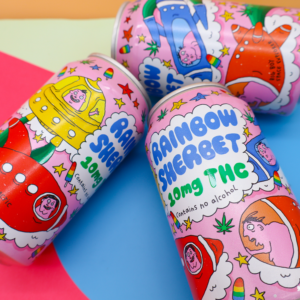
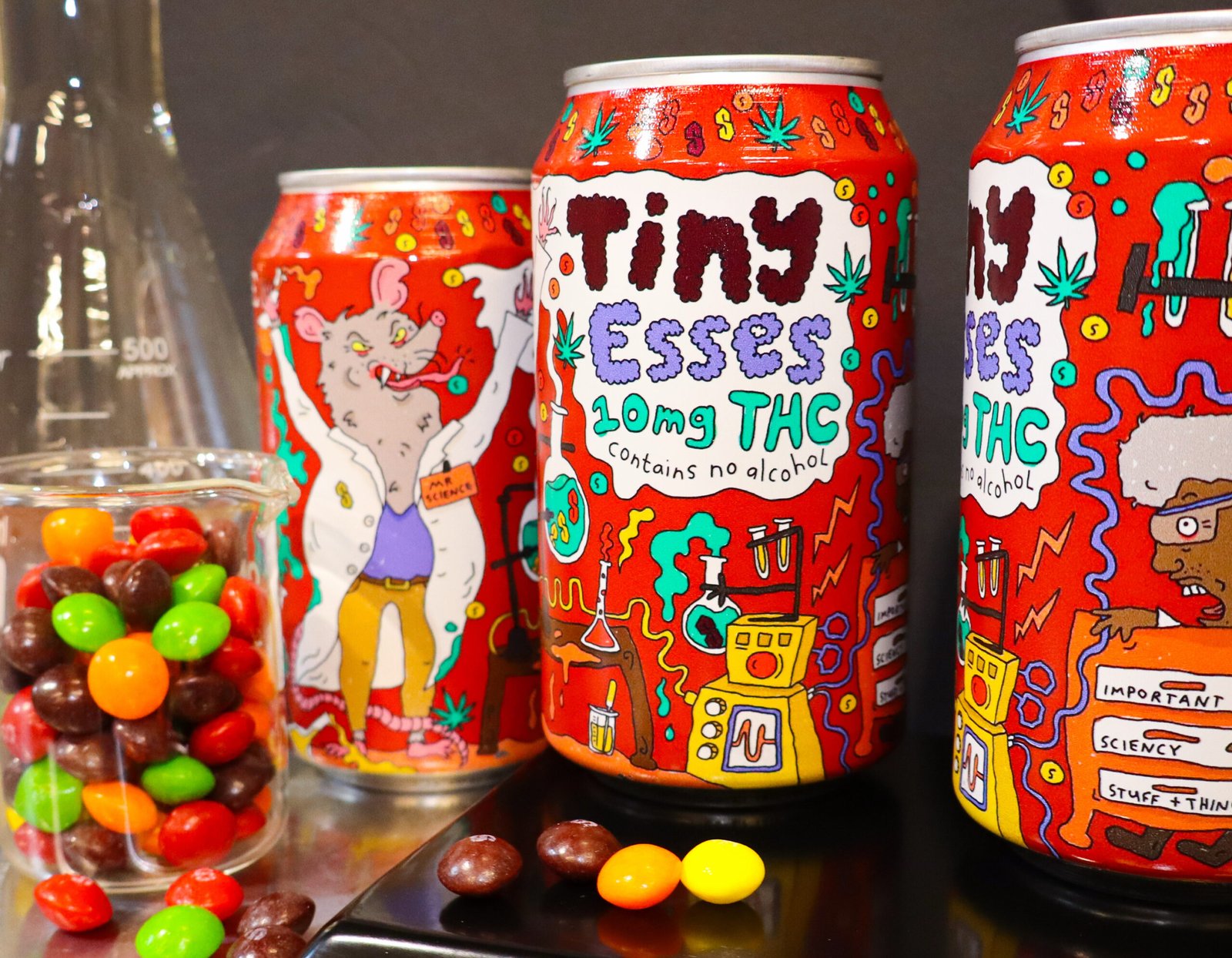
We’ve tasted the two offerings from Prairie Artisan Ales, and they are delicious. They are piggybacking on two very popular Prairie beers, Little Esses (as in Skittles) and Rainbow Sherbet, and the result is a soft drink style beverage with great fruit flavor, zippy acid, and no unpleasant weed taste. The mini-review is offered to demonstrate up front that we are not anti-THC, just as we’re not anti-alcohol, but multiple conversations with bar and restaurant owners have led us to conclude that this is a category desperate for some sort of regulation, or at least more clarity about the products and their physiological impact. Yes, we’re going to quote some of them below, but beyond the bar/restaurant operations issues, a more troubling loophole is still present.
Based on the 2018 legislation, and because hemp is a federally legal agricultural product, Delta-9 beverages are not regulated by the ABLE Commission or the Oklahoma Medical Marijuana Authority (OMMA), which means age restrictions are not required on any of these products. The obvious question is will these beverages get you high? Yes. And this leads to a legitimate concern about how accessible they should be to minors of every age, given that no age restriction means no age restriction at all. No, this is not the age old “what about the children?!” argument we’ve seen so many times surrounding alcohol laws in our state; rather, this is the reality that a child of any age can walk into a convenience store that carries these beverages and purchase one legally. Our conversations with producers and operators have yielded concern from those sectors and a commitment to responsibility in the distribution of the beverages.
“We’re learning a lot with this launch,” Patrick Lively, founder of Lively Beerworks, said. “It’s the launch of a new category, so there were a lot of unknowns going in, but the operators I’m talking to are pushing for a minimum age restriction. Congress passed a law last year that goes into effect November 1 this year to limit the amount of hemp-derived products in food and beverages, but there has been no movement on the age restrictions that I know of.”
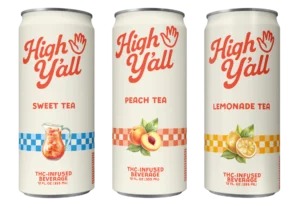
From 1970 to 2018, hemp was classified as a controlled substance (Controlled Substances Act of 1970) along with its sister plant marijuana. In 2018, mostly to help struggling farmers develop another cash crop, Congress created an exemption for hemp in the Agriculture Improvement Act, popularly known as the 2018 Farm Bill. Per the USDA, section 10113 of the bill legalized the commercial production of hemp in the U.S. Lively offered that he doesn’t think the legislators understood how quickly production could ramp up and extraction processes lead to Delta-9 products that contain enough THC to cause intoxication. For their part, Lively Beerworks limits their THC content in their tea-based High Y’all line to 5 mg, and their sales literature recommends operators sell only to customers over 21. Prairie is at 10 mg. High Tide takes the unusual and likely illegal come November 1, 2026, step of creating beverages that contain 25, 100 and 200 mg doses. We reached out to High Tide and hope to hear from them for Part 2 of this story.
From an operational perspective, restaurateurs are concerned about how best to navigate this new category. James Leewright, a former Oklahoma legislator, is the president and CEO of the Oklahoma Restaurant Association (ORA). He responded to our request for a comment with this: “Yes, THC infused beverages were a major topic this year, but at this point nothing is advancing. ORA chose not to take a support position because of the liability concerns tied to alcohol and the number of unknowns still surrounding these products. That said, I believe this issue will become increasingly important for the industry to address, especially as consumer demand, particularly among younger customers, continues to shift away from alcohol and toward THC products. I also believe these beverages should likely be regulated through the traditional three tier system.” Jimmy “J” Mays is the current chair of the ORA’s board of directors, and he is the co-owner of three restaurants in Tulsa and four in Oklahoma City, including the city’s newest sports bar Bush League. “We just don’t know how to implement this yet,” he said, echoing Leewright’s concerns about the unknowns. “Our staff is pretty comfortable knowing the impact of alcohol, and how much is appropriate without overserving, but THC is different. We’re not trained to know how 5 milligrams impacts a guest, or 10 milligrams. I’ve seen massive men incapacitated with a small dose of THC; it affects everyone differently. We are simply not equipped to handle potential adverse circumstances if a guest ingests too much, and not knowing how much is too much is our biggest concern.”
Mays also noted that he isn’t closed to offering the beverages in his concepts; he and his business partners just want more information, and he said they’d definitely impose an age limit in all their restaurants. While the availability to minors seems to be the primary concern, there are potential benefits that are difficult to ignore.

Cody Wilson is the brand ambassador for the Prairie With Love line from Prairie Artisan Ales, and he’s also the former owner of George’s Liquor and current co-owner of Modern Liquor. He was the first to bring up the age issue in our conversations, and he said Prairie is taking all legal precautions possible. “We have clearly marked all the cans as containing THC, and we’re recommending all operators age restrict them to 21 and over, just like our beer, but unfortunately there are no legal requirements for them to do that.” He also acknowledges the gaps in knowledge and training. “Each person can handle different amounts, just like alcohol, so I’m encouraging operators to get informed and then thoroughly train their teams.”
The beverages are currently available at multiple bars and stores around the state, and given that six Oklahoma distributors now have SKUs, we can expect to see more of these on shelves and in refrigerators around the state. We already spotted one brand in OnCue stores, and given the amply misreported news about the reduction in drinking — we’re drinking the same amount we did in 2018, but we’re doing much of it at home, not in bars and restaurants — operators are anxious to provide options that are zero-proof but still have an intoxicating effect. Up next, the science behind it, the potential growth pattern, and the well-respected national brands jumping on the trend wagon.